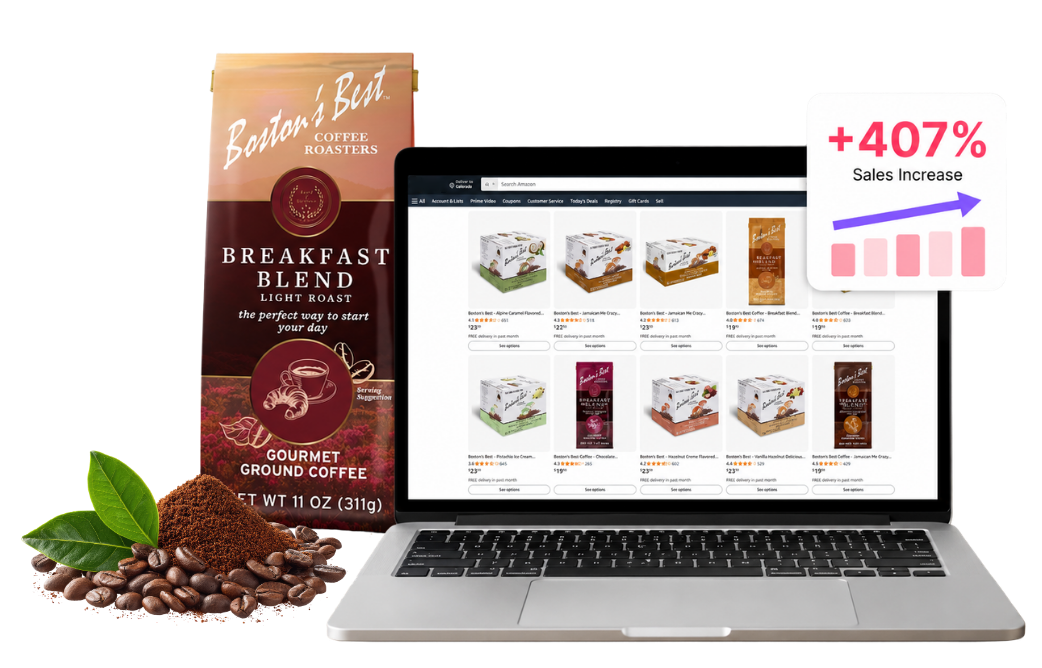
Boston's Best Coffee Roasters increased total Amazon sales by 407%, from $34,614 in January 2025 to $175,642 in January 2026.
The brand had a product catalog and a customer base. However, its biggest constraints were related to advertising. Fragmented listings, inconsistent product data, Buy Box pressure, suppressed products, and fulfillment friction made it harder for customers to find, purchase, and receive products quickly. Those issues also limited how effectively advertising could perform. Before scaling traffic, Seller Interactive needed to strengthen the account’s operational foundation.
Our approach was sequenced: stabilize the catalog, restore listing control and eligibility, resolve operational constraints, then scale demand through PPC. The results reflect the combined effect of that account-wide program, rather than any single tactic.
This case study examines how Amazon catalog management became the foundation for broader account performance, and why repairing the systems was the necessary first step to making growth more scalable.
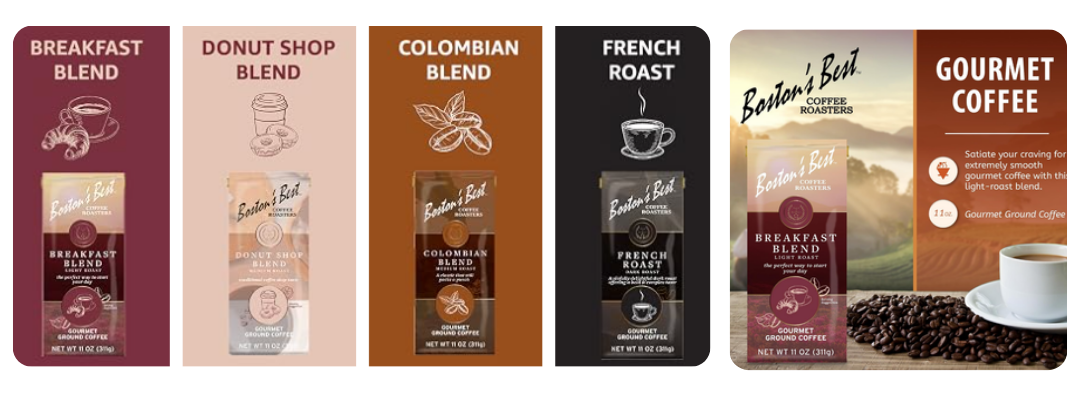
Boston's Best Coffee Roasters has a simple promise: consistently good coffee, roasted and packaged with care. Its catalog spans a range of blends, flavors, and sizes. This makes catalog structure important. Products available in different flavors and sizes need clear, accurate information so that shoppers can easily understand their options and choose the right product.
The brand had customer loyalty, but its Amazon account lacked the structure and control to represent a reliable product assortment. Our objective was to make the catalog accurate, purchasable, and operationally ready, while improving control over offers and the Buy Box before increasing advertising activity. It became the starting point for our team's repair-before-scale approach.
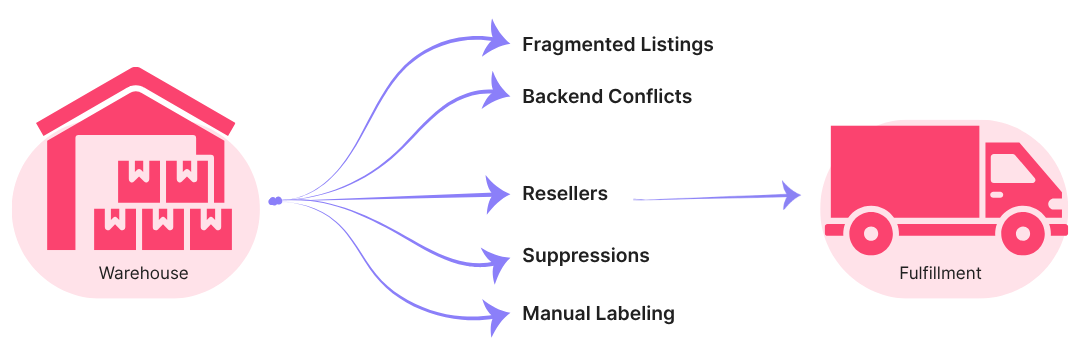
The account's constraints were connected. Catalog structure affected how products were organized and discovered; gaps in commercial control affected customer purchase; and fulfillment friction limited the account's ability to support demand. That would’ve made increasing ad spend the wrong first move. More traffic wouldn’t solve products that were difficult to find, compare, purchase, or keep active.
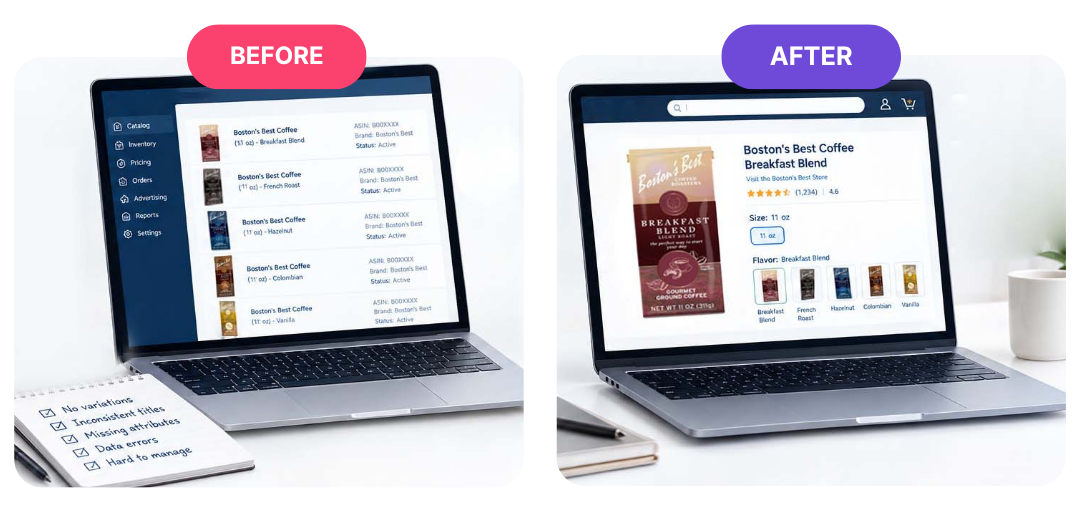
Many related products existed as standalone listings instead of being organized into valid variation families. This fragmentation made it harder to present related options.
Inconsistent backend attributes contributed to update restrictions and errors, increasing suppression risk. Suppressed and inactive listings were no longer eligible for search visibility, and PPC couldn’t generate demand the same way as healthy, active listings.
Unauthorized resellers competed for the Buy Box, contributing to pricing instability and limiting the brand’s control over its offers. The account also lacked a systematic process for managing reviews, seller feedback, and compliance oversight, leaving these areas to be handled reactively. While the account had existing PPC activity, it lacked a structured, scalable campaign program to support visibility and incremental demand.
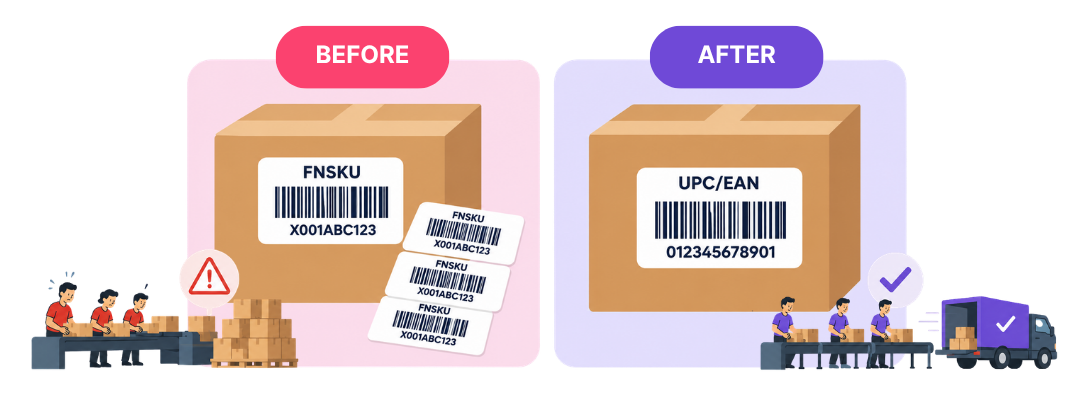
The warehouse team was spending significant time manually applying Amazon FNSKU (Fulfillment Network Stock Keeping Unit) and labels to inventory, adding labor to preparation and creating a fulfillment bottleneck. That friction might be manageable at lower volumes, but it becomes increasingly costly as order volume grows. Scaling demand without addressing it could simply shift the constraint from the Amazon catalog to the warehouse.
This raised a fundamental question: How could Boston’s Best Coffee Roasters build demand without allowing catalog and fulfillment constraints to undermine it?
Seller Interactive approached the account as a sequence of dependencies, not isolated fixes. The team identified what needed to be stable before the next stage of growth could work effectively. This required end-to-end Amazon account management across the catalog, listings, advertising, and operational systems supporting the account.
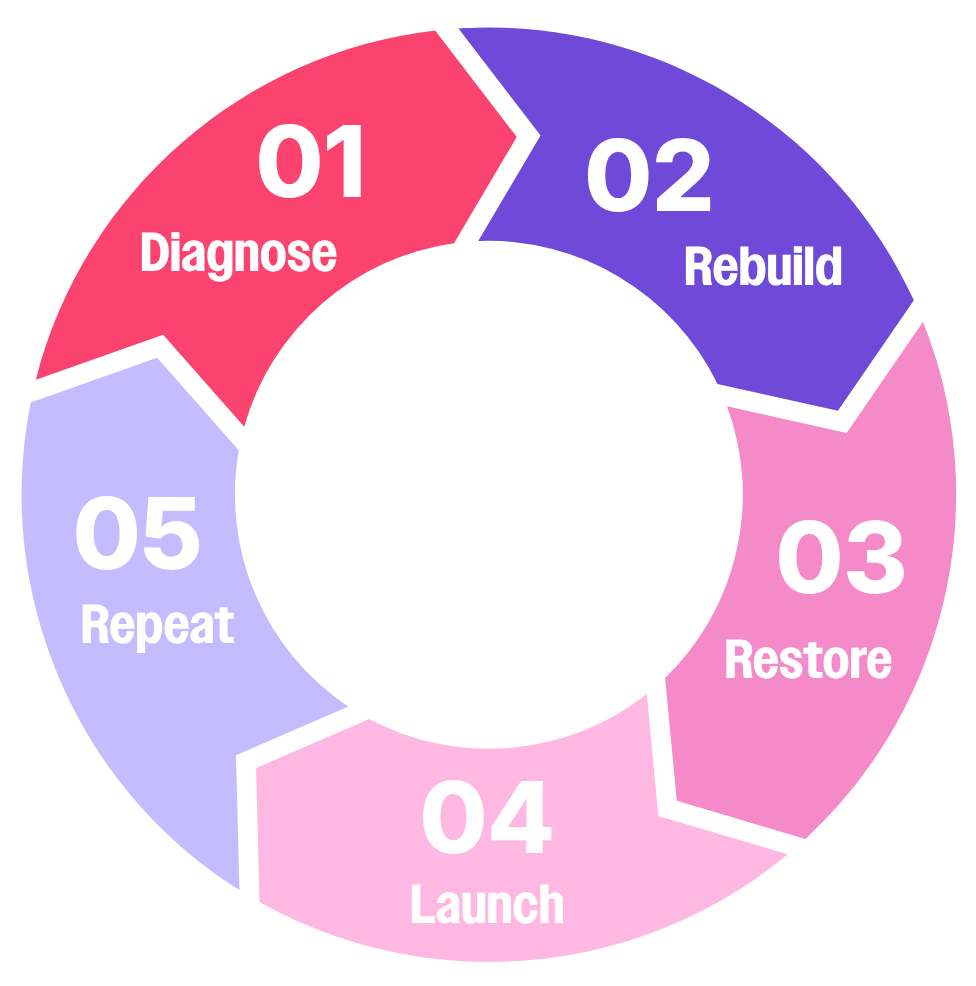
Our team began with a comprehensive review of the catalog, backend data, listing health, reseller activity, Buy Box ownership, compliance exposure, and advertising readiness. The objective was to understand how these areas interacted before making changes that could affect the rest of the account.
The audit identified attribute conflicts, suppression risks, and other barriers that could limit a PPC launch. Rather than treating advertising as the first or only solution, the team translated its findings into a phased execution roadmap that prioritized issues according to their dependencies and impact on account performance.
By addressing the factors that affected listing availability and visibility before scaling advertising, we created a more stable foundation for catalog improvements, listing recovery, and PPC activation.
The team restructured the catalog into appropriate parent-child variations organized by size and flavor, making related products easier for shoppers to compare.
Backend conflicts that prevented variation creation were resolved, while titles, bullet points, size names, manufacturer details, and other relevant attributes were standardized. Missing or inaccurate data was corrected, and Amazon cases were used to address restrictions that prevented direct updates.
Resolving these inconsistencies was necessary to improve listing management, discoverability, and the customer experience. The resulting catalog provided a more consistent structure for ongoing optimization and advertising, while historical customer reviews were consolidated within the resulting variation structure where applicable. Review consolidation was specific to this account and the circumstances at the time, not a guarantee that reviews can be combined across all variation families.
We then focused on restoring control over offers and returning suppressed or inactive products to a usable state. The team audited and tracked unauthorized seller activity across listings, then pursued appropriate enforcement and removal actions to help Boston's Best regain Buy Box control.
Separately, each suppressed or inactive listing underwent root-cause analysis to identify backend inconsistencies and compliance gaps. The team corrected the underlying issues and managed reinstatement cases directly with Amazon.
These actions addressed barriers that could prevent shoppers from finding products or completing purchases through Boston's Best listings. Regaining Buy Box control also helped protect PPC efficiency, while successful listing reinstatements expanded the range of products available for organic discovery and PPC campaigns. Together, these improvements established a more reliable foundation for scaling advertising.
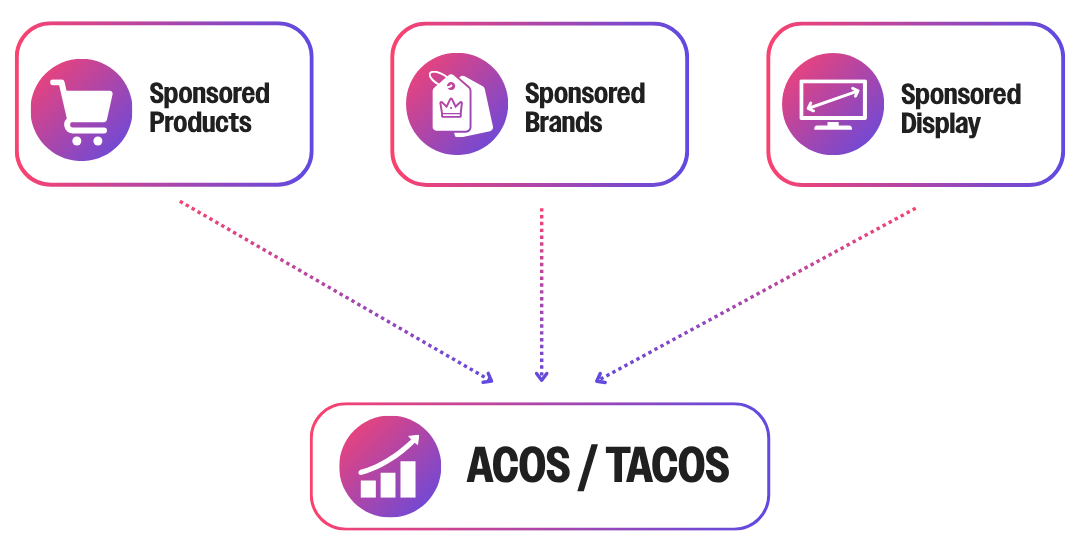
Once the foundation was strengthened, the team launched a broader PPC strategy across Sponsored Products, Sponsored Brands, and Sponsored Display. Campaigns combined exact, phrase, and broad match keywords with ASIN targeting and competitor conquesting, while automated campaigns helped identify additional converting search terms for future optimization.
We then refined bids against ACOS and TACOS objectives and strategically increased budgets during higher-demand periods, including Q4 2025. This approach positioned PPC as one part of the broader account strategy rather than a way to compensate for unresolved catalog or offer issues.
Lastly, the team implemented a systematic process for requesting verified customer feedback through Amazon’s Request a Review functionality and other compliant methods. Feedback trends were also monitored to identify recurring customer-experience issues that could affect shopper confidence. Eligible SKUs were transitioned from Amazon barcodes to manufacturer barcodes, including applicable UPC/EAN configurations. Backend barcode settings were aligned with warehouse processes so eligible inventory no longer required manual FNSKU labeling.
These improvements addressed two operational needs as demand increased: consistent feedback practices supported shopper confidence, and streamlined barcode handling reduced a physical bottleneck in shipment preparation. Together, they helped establish more repeatable processes for managing customer experience and fulfillment.
The repair-before-scale approach turned an operationally constrained account into a scaling, efficient one.
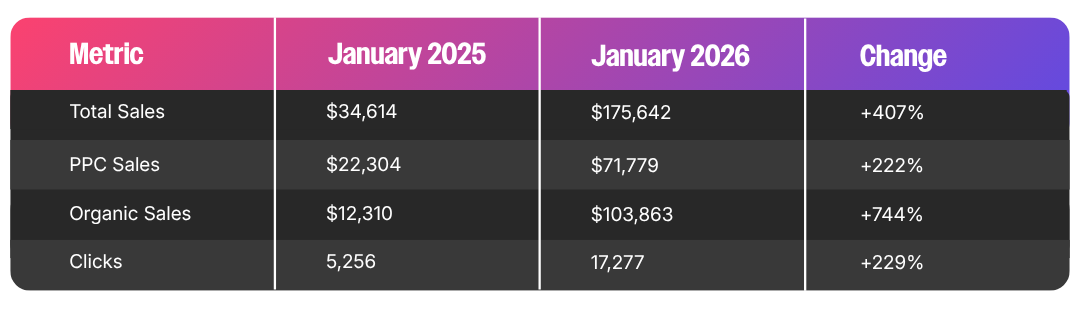
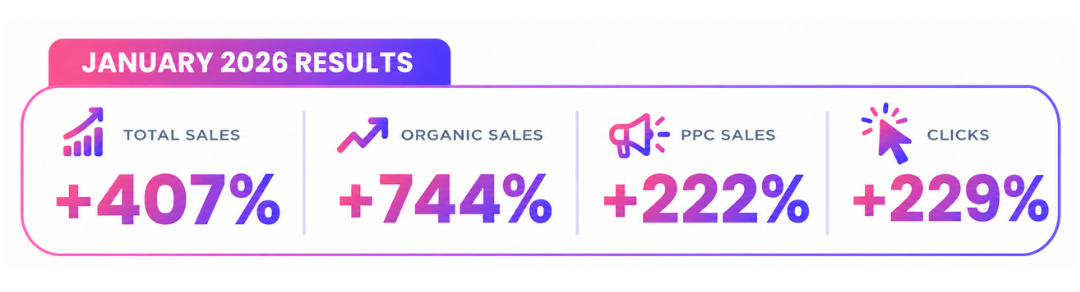
The channel mix shows that growth extended beyond paid sales. Organic sales grew faster than PPC sales and accounted for most of the January 2026 total. This pattern is consistent with the broader account strategy, in which catalog improvements and paid demand were managed together.
TACOS declined from 15.25% in March 2025 to 13.07% in March 2026, a decrease of 2.18 percentage points, or approximately a 14.3% relative reduction. The account also reached an Account Health Rating of 1000, while positive seller feedback remained at 95% over the trailing 12 months.
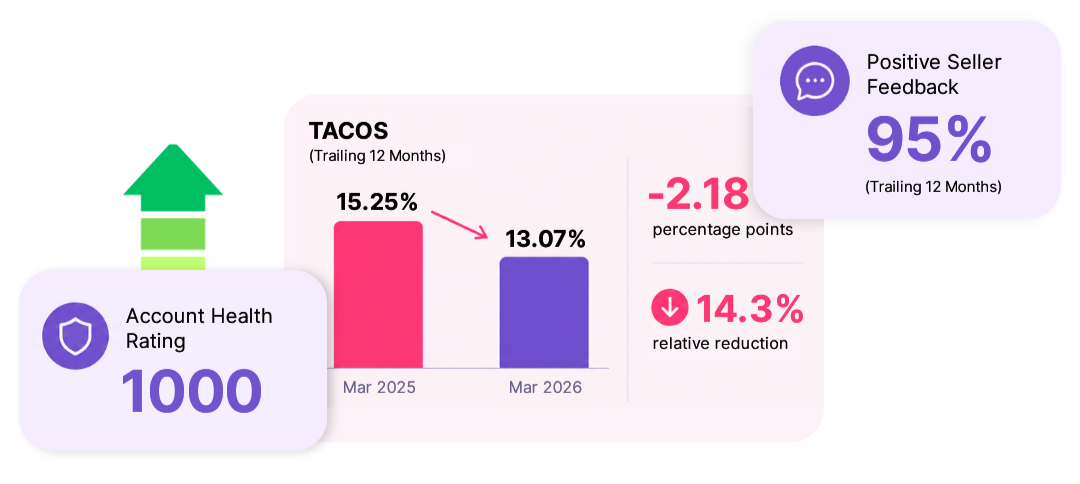
The performance data in this case study uses different comparison periods. Total sales, PPC sales, organic sales, and clicks compare January 2025 with January 2026. TACOS is reported separately using March 2025 versus March 2026. The Account Health Rating of 1000 and 95% positive seller feedback over the trailing 12 months are endpoint indicators of account health and customer feedback; they do not imply improvement from an unstated baseline.
These are observational results from direct account management, not a controlled experiment. The data supports the documented actions, the timing of changes, and the combined performance outcome. It doesn’t quantify the marginal contribution of any individual workstream or establish that a specific tactic produced a specific growth. The figures are based on Seller Interactive’s direct account work and performance reporting and were validated by the account manager responsible for the account.
The 407% year-over-year sales increase therefore reflects the account's observed performance during the documented repair-and-scale program. It shouldn’t be interpreted as a guaranteed outcome for other sellers, whose catalog structure, product mix, competitive environment, operational constraints, and account history may differ.
Boston's Best Coffee Roasters shows why Amazon product catalog optimization affects commercial growth. The case points to several diagnostic principles for brands managing complex catalogs.
Variation relationships and consistent product attributes influence how shoppers discover, compare, and navigate an assortment. At Boston's Best, organizing products by size and flavor and resolving backend data issues created a coherent, sustainable catalog.
PPC can generate traffic, but campaigns can’t perform consistently when there’s listing suppression or competing offers control the Buy Box. The brand addressed listing eligibility and offer control before scaling advertising.
In the January comparison, Boston's Best increased both PPC and organic sales, with organic sales growing faster than PPC sales. The result doesn’t establish that a specific catalog change caused the organic increase. It demonstrates why account performance should be assessed across channels rather than advertising metrics alone.
Catalog case management, compliant customer-feedback processes, and warehouse workflows can affect whether an account can sustain higher demand. For Boston's Best, the manufacturer-barcode transition for eligible SKUs addressed a fulfillment bottleneck alongside the account improvements.
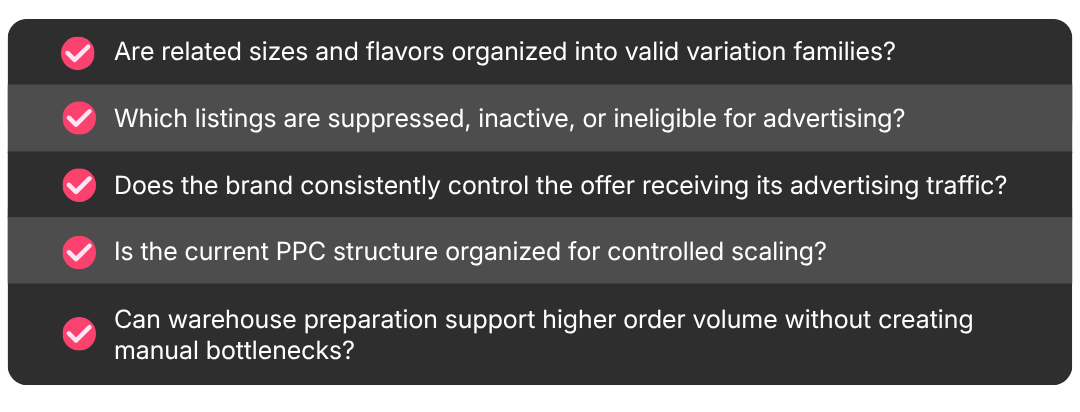
Use Boston's Best as a diagnostic starting point for your own account. Before increasing the account’s ad spend, ask: Where is demand actually being lost? Are campaigns failing to generate or convert traffic, or are deeper issues in catalog accuracy, offer control, listing eligibility, customer trust, or fulfillment preventing the account from capturing demand?
If listing eligibility, suppressions, or compliance issues are limiting performance, Amazon account health support may be part of the solution. Identifying the constraint first helps determine what needs fixing before scaling traffic.
Boston's Best Coffee Roasters reached $175,642 in total Amazon sales in January 2026, a 407% increase from January 2025. The result followed a deliberate sequence: Seller Interactive first repaired catalog structure, product data, listing availability, offer control, and operational constraints, then scaled demand through PPC.
TACOS declined from 15.25% in March 2025 to 13.07% in March 2026, reflecting advertising efficiency during the account management period.
Is catalog complexity limiting what your Amazon advertising can achieve? Talk with Seller Interactive about identifying the account, catalog, and operational constraints standing between your brand and scalable growth.
Explore more Amazon success stories to see how other brands approached distinct catalog, advertising, and operational challenges.